- Apply now at MySchools.nyc! Learn More
Science
Science Department Curriculum
Aligned with the New York State Science Learning Standards (NYSSLS)
The 9th and 10th grade classes need to be switched. Move Earth & Space Sciences list to Grade 10 and Move Biology list to Grade 9.
Science Department
Welcome to the Science Department
Welcome to the Science Department,
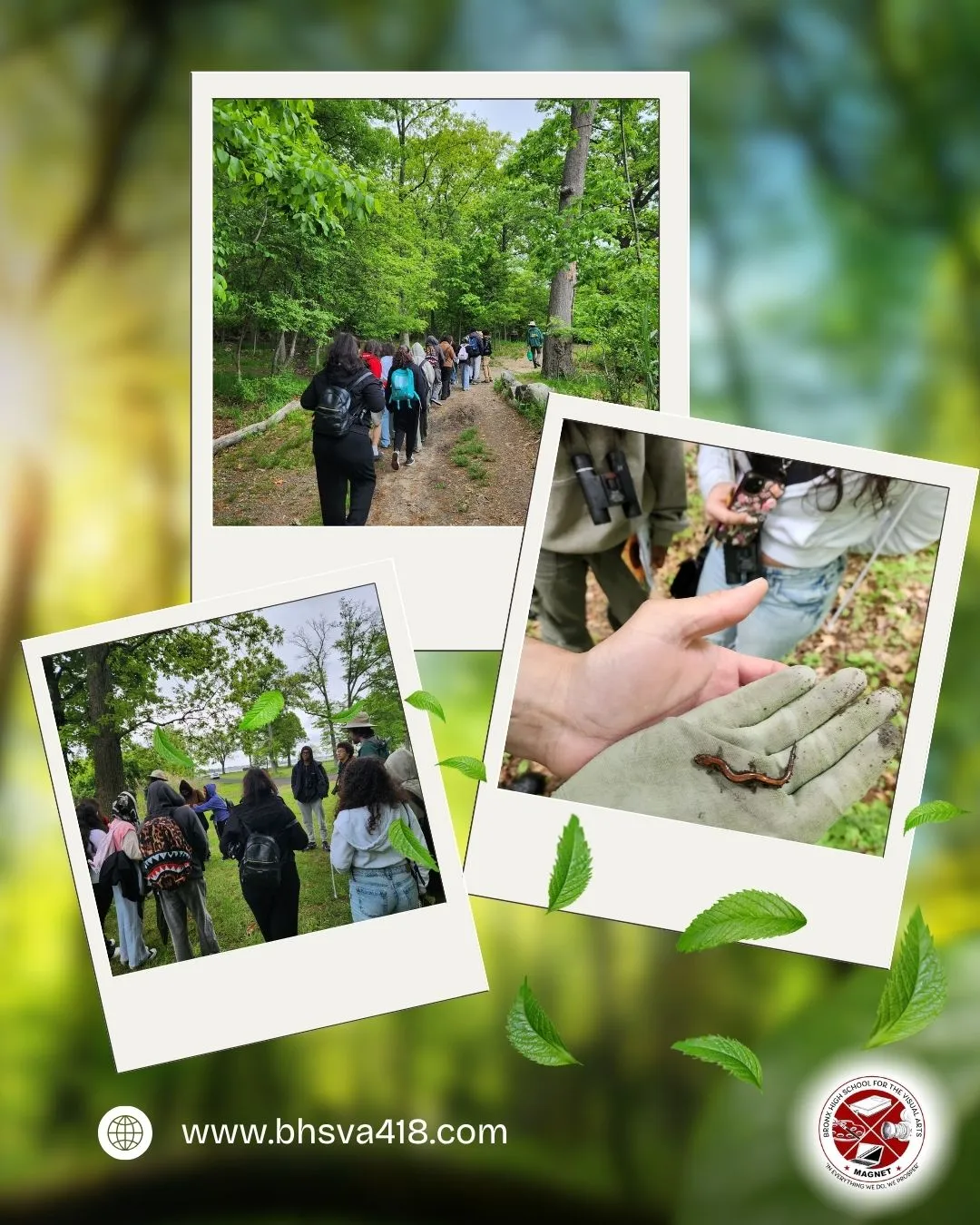
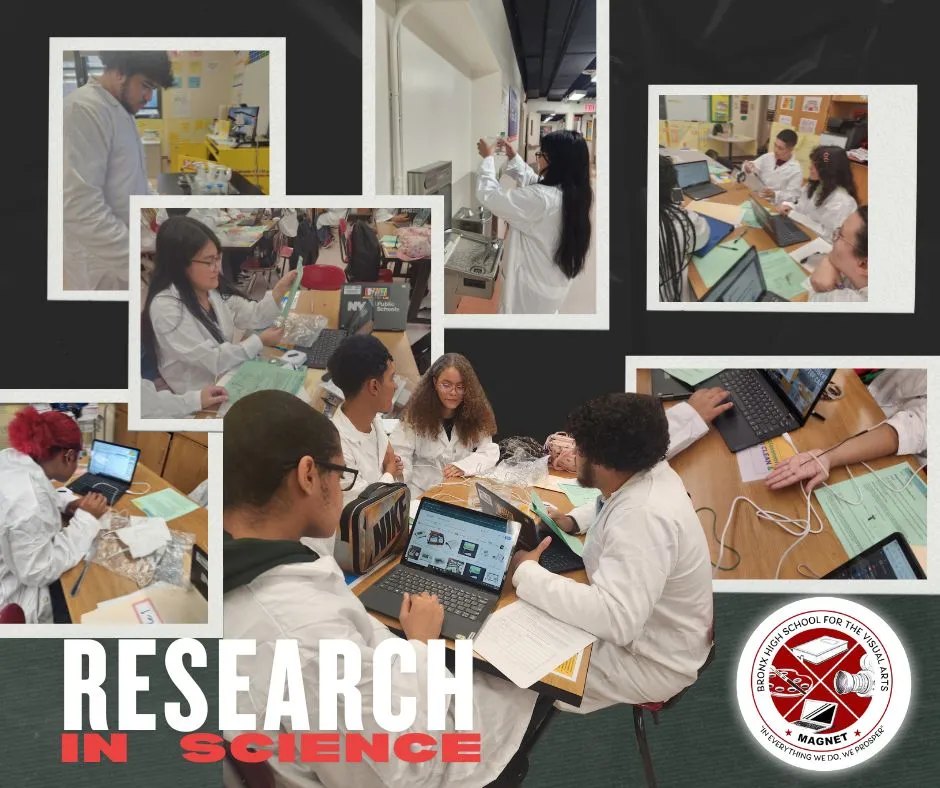
where we cultivate the next generation of critical thinkers, problem solvers, and scientific innovators. Our department is dedicated to transforming the science classroom into a vibrant research laboratory. Here, students don’t just memorize isolated facts; they actively do science to make sense of the world around them.
By leveraging the power of two nationally recognized, research-backed programs—the New Visions for Public Schools Curriculum (for Biology and Earth & Space Science) and the OpenSciEd Curriculum (for Physics)—our science pathways are purposefully designed around the Next Generation Science Standards (NGSS). Our curriculum shifts the focus of science education away from passive listening and toward active, three-dimensional inquiry.
Our Instructional Core: The Student as Scientist
In our classrooms, daily instruction moves away from rote lectures and focuses on Phenomenon-Based Learning. Every unit begins with an anchor phenomenon—a real-world mystery, socio-scientific challenge, or engineering problem. Students investigate these phenomena by driving their own learning through three core pedagogical strategies:
- The 5E Instructional Model: Our lessons carefully guide students through cycles of Engagement, Exploration, Explanation, Elaboration, and Evaluation. This cycle ensures that students build a deep, conceptual understanding before formal scientific terms are introduced.
- The Driving Question Board (DQB): At the start of every unit, students generate their own questions based on initial observations. This visual interactive map guides our daily investigations, giving students direct ownership over the direction of their coursework.
- Evidence-Based Argumentation: Using the Claim, Evidence, Reasoning (CER) framework and language tools like the See, Think, Wonder protocol, students learn to defend their scientific ideas using concrete empirical data.
Our Core Science Pathways
Our high school science sequence is strategically scaffolded to develop deep data literacy, system-level thinking, and mathematical complexity over three or four years:
- Biology | Powered by New Visions:
Students explore the intricacies of living systems, cellular mechanics, genetics, homeostasis, and ecological interdependence.- Unit 1: The Marathon Runner
- Unit 2: Humans vs. Bacteria
- Unit 3: Evolution of Sick Humans
- Unit 4: Saving The Mountain Lion
- Unit 5: Food for All
- Unit 6: Woolly Mammoth
- Earth and Space Science | Powered by New Visions:
Students scale their thinking from microscopic interactions to planetary and cosmic dimensions. They investigate Earth’s dynamic internal structures, biogeochemical cycles, global climate change, and stellar evolution.- Unit 1: Discovering New Worlds
- Unit 2: Probability Of Life Elsewhere
- Unit 3: Earthquakes, Volcanoes, and Tsunamis: Who’s At Risk
- Unit 4: Climate Change
- Unit 5: Extreme Weather Coming To A Place Near You?
- Unit 6: Solutions For A Sustainable Future
- Physics | Powered by OpenSciEd:
Students formalize their analytical skills by combining algebra-based physics with engineering design. They collaboratively test and model forces, energy conservation, wave mechanics, and electromagnetic systems.- Unit 1: Energy Flow From Earth’s Systems
- Unit 2: Energy, Forces, and Earth’s Crust
- Unit 2B: Heat Transfer
- Unit 3: Collisions and Momentum
- Unit 4: Meteors, Orbits, and Gravity
- Unit 5: Electromagnetic Radiation
- Unit 6: The Big Bang and Telescopes
Equity, Community, and Collaboration
human endeavor and that every student belongs in science. Our curriculum is built upon the principles of Universal Design for Learning (UDL), offering diverse access points for all learners.
Through collaborative lab work, structured discourse protocols, and scientific consensus circles, our students learn to value diverse viewpoints. They graduate not only with a robust portfolio of scientific knowledge but also with the teamwork, skepticism, and analytical skills necessary to navigate a data-driven world.
Grade 9
Earth & Space Sciences
- Weather, climate, and Earth systems
- Plate tectonics and geological processes
- Astronomy and the universe
- Human impacts on Earth
- Regents Earth Science Exam
Grade 11
Physical Sciences (Physics)
- Physics: Motion, forces, energy, waves, and electricity
- Regents Physics Exam
Grade 10
Biology
- Cell biology and genetics
- Evolution and biodiversity
- Ecology and environmental relationshipsHuman body systems and homeostasis
- Regents Biology Exam
Also Offered
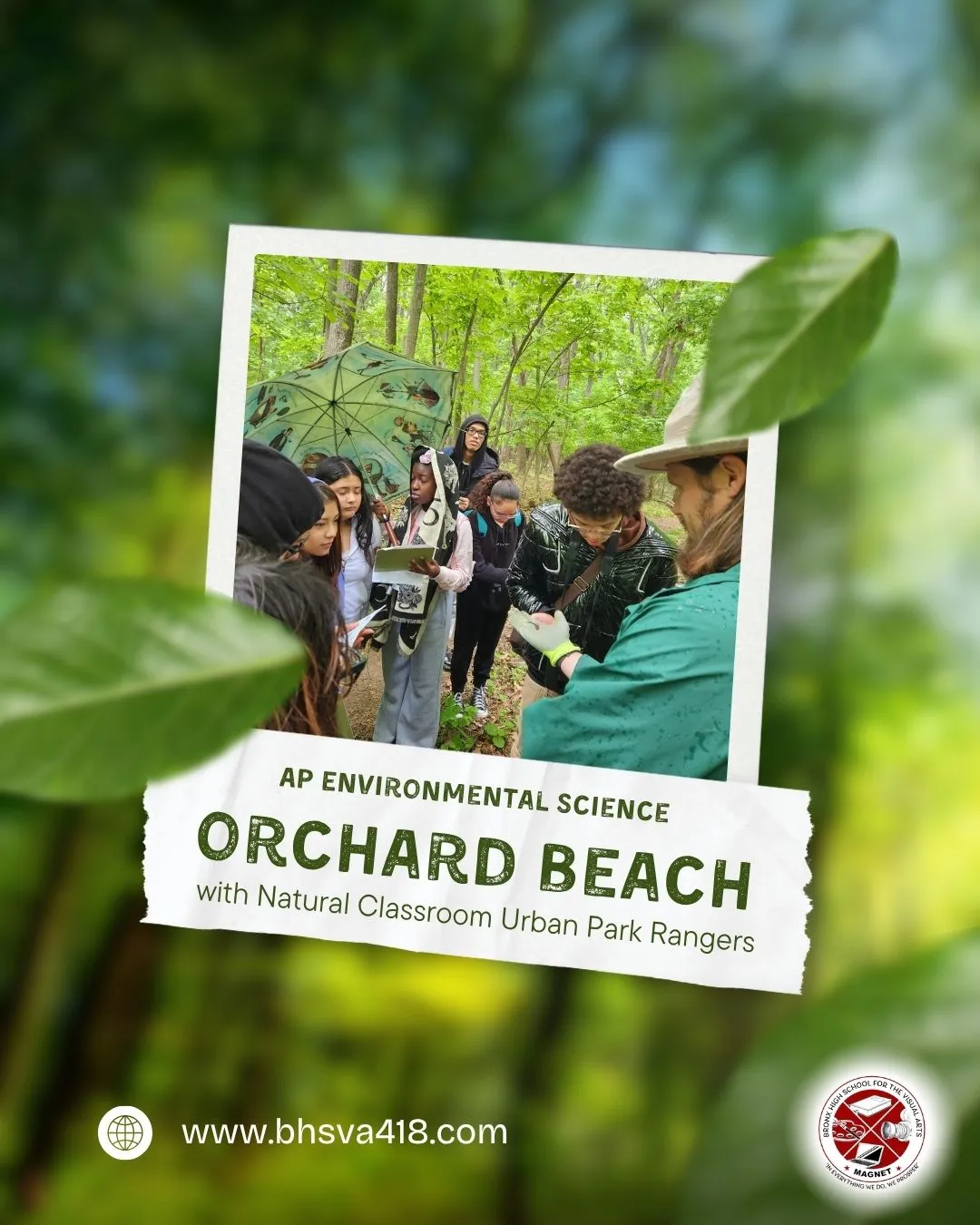
AP Environmental Science
- Ecosystems, biodiversity, and sustainability
- Energy resources and consumption
- Pollution, climate change, and environmental policy
- College-level lab investigations and case studies
Core Features of the NYS Science Curriculum
- Three-dimensional learning: core ideas, science practices, and crosscutting concepts
- Emphasis on inquiry, modeling, and data analysis
- Lab-based instruction and hands-on experimentation
- Regents and AP course offerings for college readiness